ENGR 1201 Overview
Class Summary
ENGR 1201 was the introductory class for all first-year engineers at UNC-Charlotte until Fall 2025. This course was designed to cover base-level fundamental engineering principals and was based around group work and projects. Students learned to write engineering memos in the Chicago-Manual Style to reflect on the differences in engineering disciplines offered at UNC-Charlotte and to write reports and reflections on projects throughout the semester. The goal of this course was to allow students to better learn how to work in groups and gain exposure to the types of problems and solutions that different engineering disciplines face.
The three main projects are listed below.
Statement about Downloadable files.
While ENGR 1201 is a class that is being changed with new curriculum, I acknowledge and understand that these projects may be reused for future students. I will refrain from sharing anything other than my own personal work in a non-editable format in an effort to prevent myself and/or others from violating UNC-Charlotte's Code of Student Academic Integrity. I will also refrain from linking any collaborative work in an effort to protect my team members' privacy. All downloads are for observation only and should not be redistributed, copied, or claimed as your own work. My hope is that the files demonstrate the level of work and detail that I put into this course in an effort to further my experiences towards being a future engineer.
Beam Project
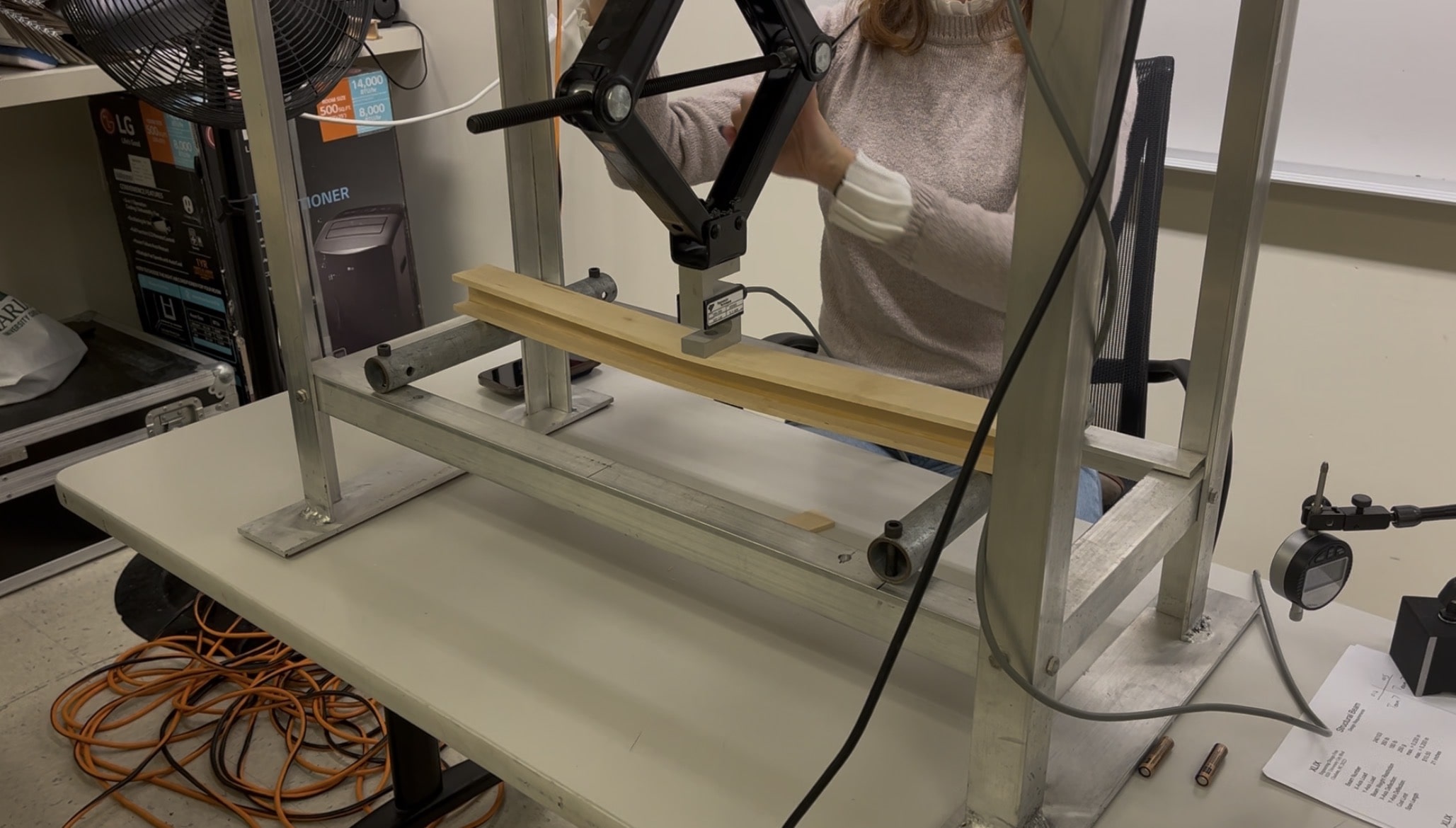
When covering Civil Engineering, students were tasked with a multi-step Beam Project. This related to the fundimental principles and calculations of beam design while allowing students to then construct a physical beam and test it within their given constraints and budget. My group was able to pass this project with full marks and results include a beam caclulator made with Microsoft Excel, a physical beam, and an analysis-reflection memo. The beam calculator has sections for an I-Beam, H-Beam, and Hollow-Box Beam with a seperate page to calcuate load bearing capacity. Details and copies from my group's project can be found below. (My personal copy of the beam calculator in Excel will not be linked due to my priority of operating within the UNC-Charlotte Academic Integrity Agreement)
Here is a download link to a copy of my individual beam design memo and bill of materials.
Beam Project Zip FileSeen on the right is an image of my group's I Beam being tested:
Circuit Project
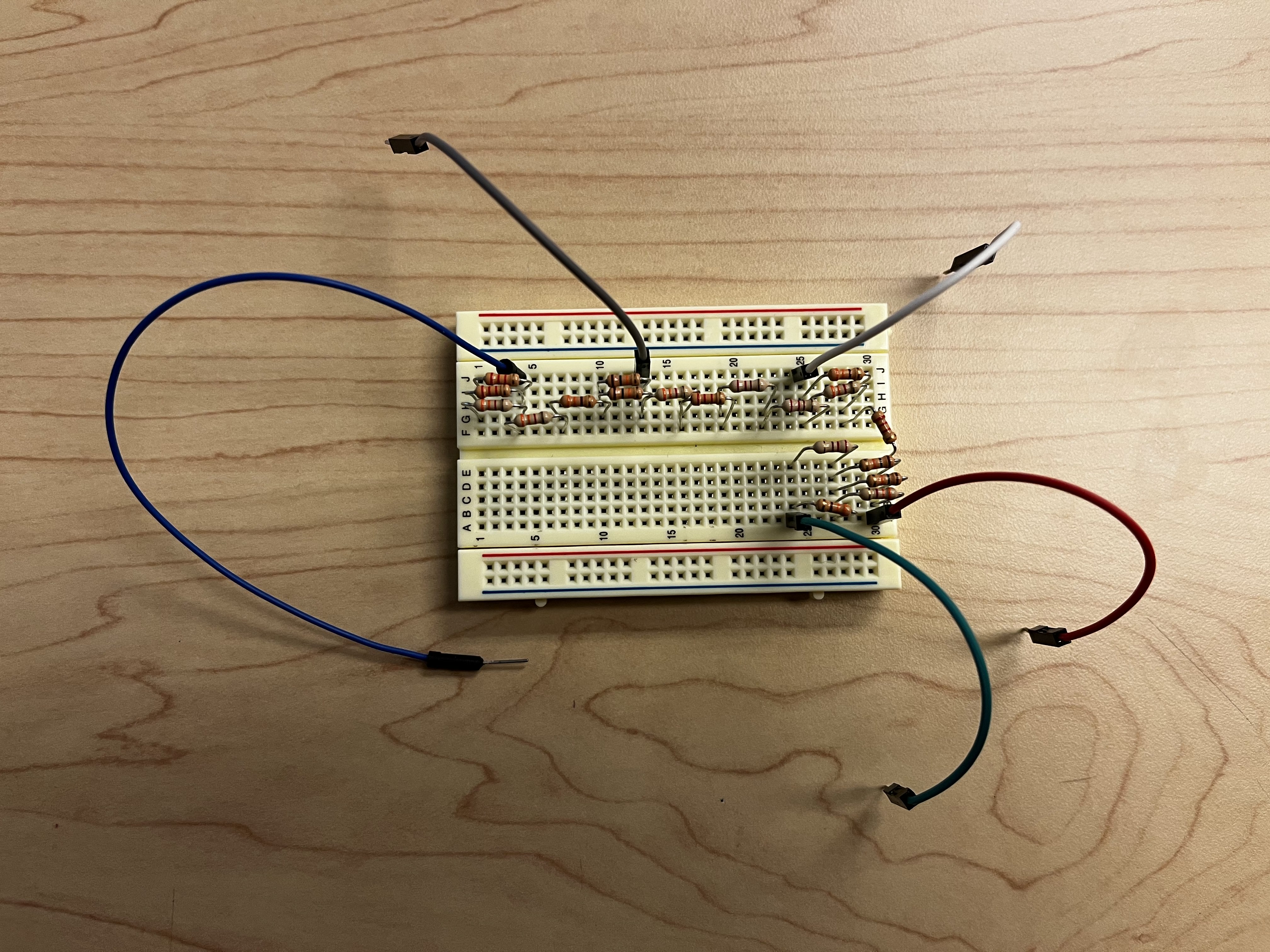
For Electrical and Computer Engineering, students were tasked with creating a simple circuit with proper voltage drops at respective nodes in the circuit using resistors. This was an individual project where students had to first calculate the proper resistors to use in compinations to create accurate voltage drops. I was able to calculate, diagram, and put together a bread board that passed the project with full marks. Results included the circuit diagram, physical bread board circuit, and analysis-reflection memo. More details and copies from the project can be found below.
Here is a download link for my design and analysis memos.
Circuit Project Zip FileSeen on the left is an image of my physical circuit used for the testing of this project:
Mechanical Project
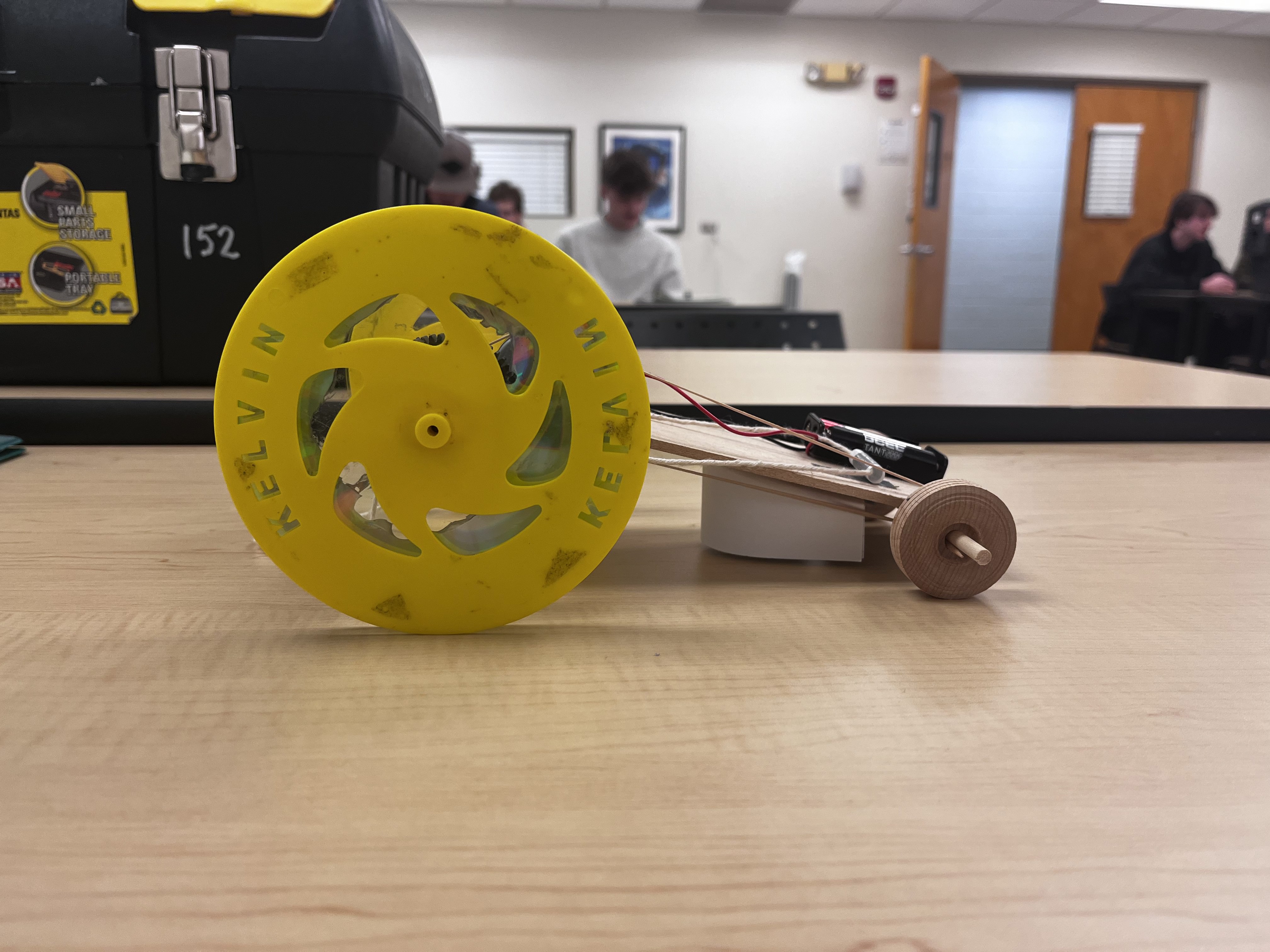
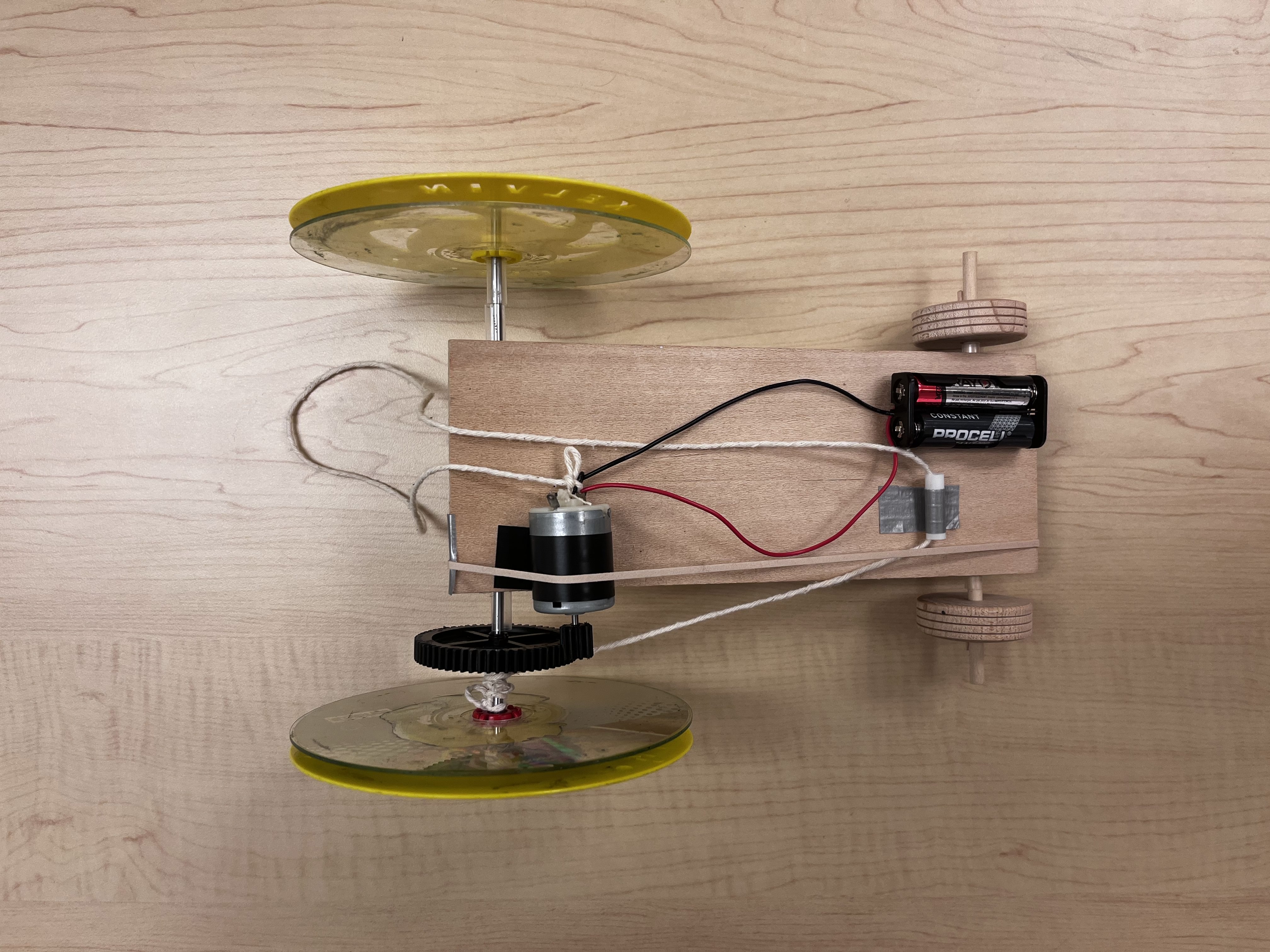
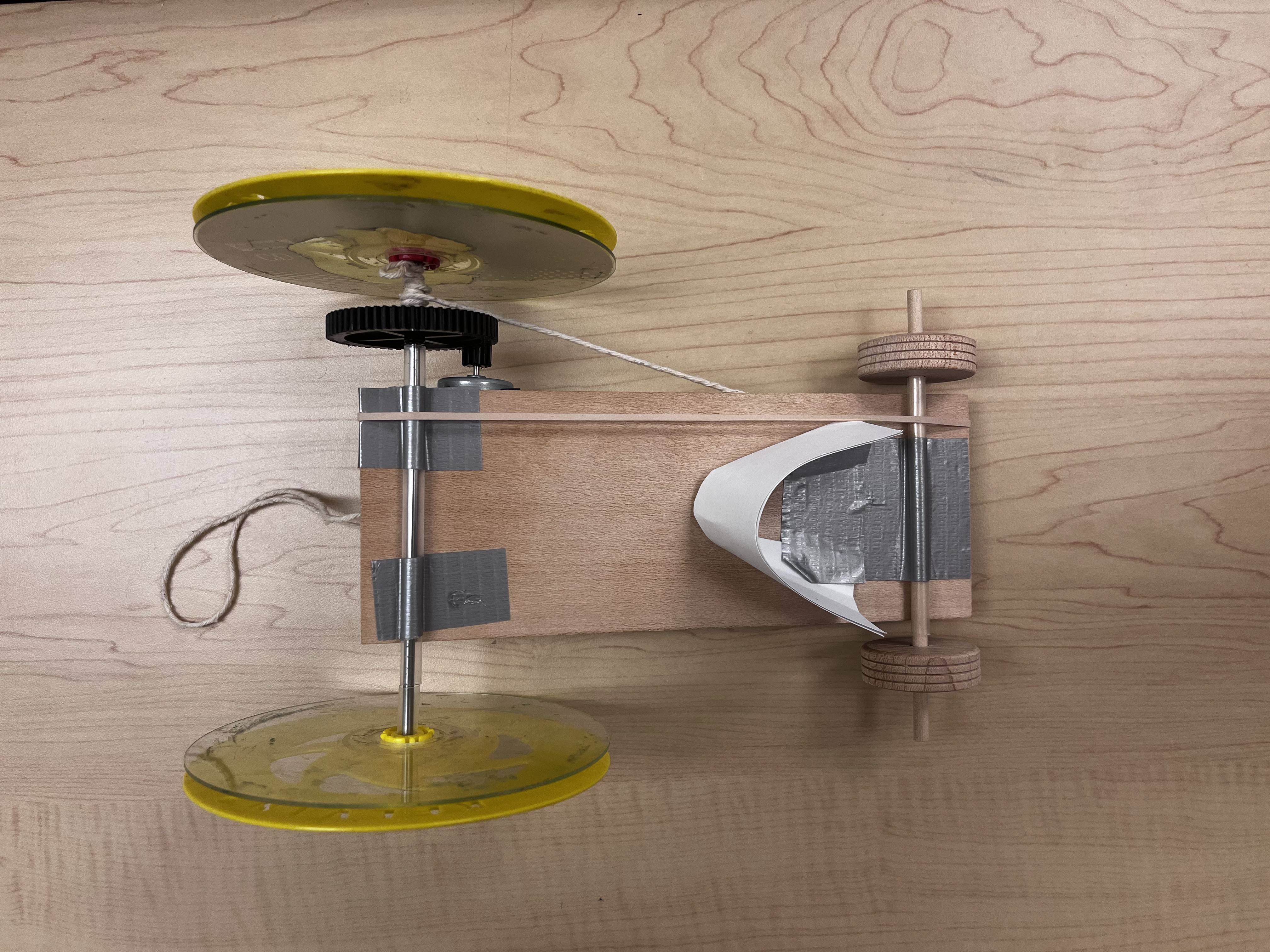
For the section on Mechanical Engineering, students were tasked with a goal of moving a set of steel ball bearings from a starting point to a specific point 15-20 feet from the start. This point was not revealed until the testing day, so the challenge also required teams to be able to adjust and calibrate their design to the revealed target. This project was also graded as a competition with the highest points being awarded to the team who was able to make it closest to the target within two attempts. (Teams were allowed two test runs that would not be counted, and more test runs as time permitted.) The team I was a part of was able to make a final attempt only a mere 3 inches away from the target which awarded us with the 1st in our class. This may be in part due to some amount of luck, but our design was modeled around slow, high power that would move straight and steady. The motor we used would be stopped by an adjustable length of string with one end attached to the wire connecting the motor and battery and the other end to be caught on the rear axle. This acted as our break, since as the vehicle advanced the string would wind up and eventually disconnect the battery. With our test runs, the length was fairly easy to dial in for a semi-accurate prediction of distance.
Here is a download link to the bill of materials and my computer generated images of the design.
Mechanical Design Project Zip FileSeen on the right are images of my team's mechanical vehicle: